There is a tin pail of ash hanging on a nail in the doorframe with my name on it. Every day before I leave for the schoolhouse, I use the hard-bristled brush from the bucket to dust my dress, arms, shoes in darkness. My hands are covered in soot when I drop the brush into the pail. I smear it over my cheeks and the bridge of my nose.
My brothers and sisters do not use the ash because it is mine. I am my family’s darkness.
When I step into the sunshine, I can smell orange blossoms. It makes me sneeze, but I inhale anyway. One of my older cousins, Leena, waits for me outside. She takes my hand, ignoring the filth. I walk far enough away that my sooty dress won’t dirty hers, but close enough to keep hold of her hand.
The neighbor looks mean at me through her window when we walk by. I cannot look at her face, so I watch my boots instead.
The only sound we hear on the way to school is the whistle of wind through the groves and the crunch of gravel underfoot. Our steps are the same. The weight of our feet on the rocks is almost the same. We are almost exactly the same, but we’re not. I am the dark one, the wrong one.
I sit in the back of the schoolhouse, and Leena sits in front. She smiles at me and points to the seat next to her. I shake my head. That seat is not for me. Mine is in the back so no one has to look at my wrongness.
My best friend, Tareck, slides onto the bench next to me, a trail of soot maring the wood where he’s touched it. He is his family’s darkness too.
Our eyes meet, and we both smile at the ash on our faces. It isn’t a smile that makes merry. It only sees and likes to be seen. One day I want to grow bigger and learn how to make his wrongness go away. Perhaps there is a special school, a no-more-darkness school.
Sometimes my mind wanders while the instructor talks. I hear him when he speaks about shapes and numbers, but I cannot remember the story of our king he told us after lunch. I ask Tareck when we’re dismissed, but he says too many words, and I forget to listen. I hope he doesn’t notice.
Leena takes my hand and leads me through the center of town so we can buy taffy. The lemon one is my favorite. I eat five pieces, then search the crevices of my teeth with the tip of my tongue. I like that lemon taffy does not look like ash. I hope it doesn’t mind a dark one eating it.
Behind the general store, a stranger digs a well. His coveralls are tied around his waist and his flannel shirt is soaked through. Sweat drips off the orange hair falling in front of his eyes. Papa said that the man was asked to dig the well, but no one in town hired him.
I stop and watch beads of sweat fall from his hair into the hole. I want to get closer to see the bottom, but I don’t.
“He might be secretly bad,” my cousin says.
But he looks nice to me.
Leena tugs my arm, and I sigh through my nose. I want to watch him until I cannot see his orange hair anymore, like the sinking sun.
He looks up when I exhale and meets my gaze. He smiles. I smile back.
“Why are you digging a well?” Leena asks. “We already have one. Kingston has an aqueduct and—”
“This isn’t that kind of well.” He rests his arm on the top of the shovel.
“Not the kind of well that gives water to the town?” she presses.
He wipes his forehead on his shoulder. “Not that kind of water.”
Leena shifts her weight, then tugs my arm again. “C’mon, Fenn.”
But I slip my hand from hers and take a step closer to the hole. I crane my neck to see the bottom. “Is it a magic well?”
He cocks his head, thoughtful. “Something like that.”
“Does it grant wishes?”
“No. It’s for washing.”
My heart squeezes like Mama’s dish rag. “But—”
“C’mon, Fenn!” Leena grabs my hand, and drags me away.
Tears drip off my chin on the way home. I watch them fall onto the dirt and stones, imagining the bottom of the man’s hole looked just the same from his dripping sweat. We are almost the same, but we’re not. I am a dark one.
If it had been a wishing well, I would not need a no-more-darkness school. But maybe the magic water is not for wrong people who have wishes.
The neighbor is in her rose garden when I walk by. She glares at me, then moves her shovel and seeds closer to her. She thinks I am a stealer.
Inside, the house smells like baking bread. Papa kneels by the fire gathering soot in my bucket. He breaks up the chunks with the end of the brush. Then he hangs it on the nail by the door before kissing me on my head. I follow him to wash up in the small kitchen.
At dinner, I tell everyone about the strange man. When I get to the part about the wishing well, they all laugh at me. I do not finish the story.
When I finally rest my head on my pillow, I think about all the arithmetic I did not finish because my mind only had space to think about the magic well. The school master will use the paddle on my legs again, but that’s okay. I am used to the sting now. Dark ones always are.
***
The man is digging the well again today. If I crouch down, his neck looks like it is growing out of the ground like a stem.
“We don’t have time to watch him, Fenn.” Leena tries to drag me away, but I plant my heels in the gravel. “We’re going to be late for school!”
“Go without me. I will get the paddle anyway.”
She sighs and walks away, long brown braids swinging like ropes over her shoulder blades.
“Back again?” The man asks. He does not look up from his work.
I inch closer and kneel on the hole’s edge. The bottom is dotted with dark specks from his sweat.
I knew it. . . .
“Why are you digging the well? Leena says you are secret bad because no one asked you to dig here.”
The man laughs, but I do not think he is laughing at me.
“Someone did tell me to dig here, but they aren’t from this town.”
“Who? A wizard?”
“Nope. Better than a wizard.”
I inch closer so the toes of my boots hang over the edge. A few pebbles fall into the hole.
He looks up, and rests his arm on the top of the shovel. “What else is better than a wizard but a king?”
I gasp. “Does the king have magic too?”
“That’s right. Your king has a deep well of magic, and his very favorite thing is to share it with you.”
“But you said it was only for laundry.”
He laughs again, and it sounds like a dog’s bark. “I said it was for washing. Can you think of something you would like to wash besides clothes?”
I look at my hands, at the ash under my fingernails. Tareck’s face swims before my eyes. “Dark ones and wrongness?”
The man frowns. He looks at my smeared cheeks and dress. “What are dark ones?” His voice sounds angry, but gentle. Maybe it is not me that made his voice that way.
“Most families have a dark one.”
He cocks his head like Leena’s dog when he is confused.
“We must wear our darkness,” I say, “so that others will know we are loud, or slow, or forgetting. My papa gives me my darkness in a pail of ash, and I put it on. I am my family’s darkness.”
He jabs the tip of his shovel into the earth like a weapon. He does not look pleased. “This water won’t wash that away, because that isn’t true darkness.”
“But you said it washes—”
“Not your face or clothes or hair. When I finish this well, I’ll offer everyone in town a cup of the king’s water to drink. If they take it, it’ll wash the darkness from their heart, and they’ll be rightness.”
“The whole town won’t need it, because not all of them are dark ones.”
One of his eyebrows jumps up like it’s going to fly away. “You think so? Covering a child in ash to mark them for something they can’t control is something a dark one would do. Everyone needs the king’s water, Fenn.”
I clench my hands into fists. “What does it mean?”
“It means that no matter how much ash you put on, you will never be a dark one again if you drink this. But no matter how many baths someone takes, they will never be clean until they have tasted the water from the king’s well.”
“Can Tareck have some too?”
“Anyone who wants to be free of their darkness can have a drink from this well.”
I jump to my feet, and a cloud of dust rises between us. “I will come back.”
My feet raise clouds of dust all the way home. When I walk inside, the house is empty and all I hear is my own breathing. I snatch the pail from the doorpost.
That is not true darkness.
The ash billows like the dust on the road when I dump it in the fireplace. I try to smile, but I do not feel happy. Papa will be angry when he gets home. He will say that I am a selfish girl not to warn people of my wrongness.
I kneel to scoop soot back into the pail with my hand.
My name is on the tin written in ash. It belongs to me.
***
Tareck, two girls, and one older boy from school come with me to the well after supper. We are all dark ones. I asked the others why they did not want to be clean. They looked at me with anger in their faces and said they were not wrong like me. They do not need the king or his magic well.
Tareck and I lean over the hole where the man is now a foot below ground.
The shovel makes a funny slopping sound in the dirt like cucheh. Cucheh. Cucheh. Cuch—
A low gurgling noise springs from the bottom of the well like the first bubbles to break the surface of Mama’s corn chowder.
Water.
My hands and knees shake, but I am not afraid. Tareck smiles. He is shaking too.
The older boy named Cairn kneels next to us. He pulls a tin cup from his school bag and hands it to the man. “Can I have a drink now, sir? I don’t mind the dirt.”
The red haired man straightens and looks the dark boy over. “This water washes the inside, not the outside.”
Cairn dips his head. “Yes, sir.”
The cup fills with muddy water, and the boy drinks like he is offered fresh cider. It drips off his chin and speckles the dust under his bent knees. Cairn sniffs like he is trying not to cry. I wish he would so I could too.
The man refills the cup, and Tareck takes the next drink before passing it to me. I do not ask for it to be refilled before drinking the last swallow. Cool water and sand pass over my tongue.
I feel coldness seep into my ribs then stomach. It speaks with a gentle voice that my ears cannot hear.
“You’re rightness now, Fenn,” the well digger says with a grin as he takes the cup back to refill it.
“Thank you,” I whisper. My tight throat does not want me to speak anymore.
I turn and dart down the road toward home. The pail is there with my name on it.
It stares at me like it is mine. But I do not want it anymore.
Slowly, I slide it from the hook, wipe my name off with my sleeve, and pull the nail out of the frame with my fingers. It hurts a little.
The ash goes in the fireplace and the pail in the bottom of the garbage where no one will find it. I fill the hole in the doorpost with plaster so everyone will see the bright white spot where there used to hang a pail of ash. Father will be angry, but that’s okay. I am used to the paddle.
After I change my clothes and scrub my face, I walk outside so the trees and sky can see my clean face. The wind blows, and I smell the orange blossoms.
A hand grabs my wrist very hard. I look up. The neighbor is standing very close, and her round face looks like an angry bull.
“How dare you stand out here without your darkness!”
She drags me into her house. It smells like lavender and cats. I scrunch my nose. The neighbor unlocks the door on her black iron stove. She uses the little broom next to the stove to cover my dress in soot.
I try to pull away. “I do not want the darkness anymore!” I say. But she will not let go.
Once she finishes rubbing a scratchy coal over my cheeks, she shoves me out the door. “Don’t think I won’t tell your Father about this!” The door slams shut.
Tears dripping, I run down the road and into town. The man is there sitting on the side of the well. He looks at me when I sit by him.
“What’s wrong?” He asks with a frown in his eyes and his voice.
And I tell him. The wrinkle between his eyebrows gets deeper when I speak of the neighbor. I like to watch the freckles disappear into his wrinkled skin. It helps the tears stop coming.
“People can put soot on your dress, Fenn,” he says when I’m quiet, “but they can’t make you a wrong one.” He bumps my shoulder with his. The wrinkle is gone, and all his freckles are out. “Do you know why?”
I sniff and watch my feet dangle over the water in the well. I am not my family’s darkness.
“I am a girl of rightness.”
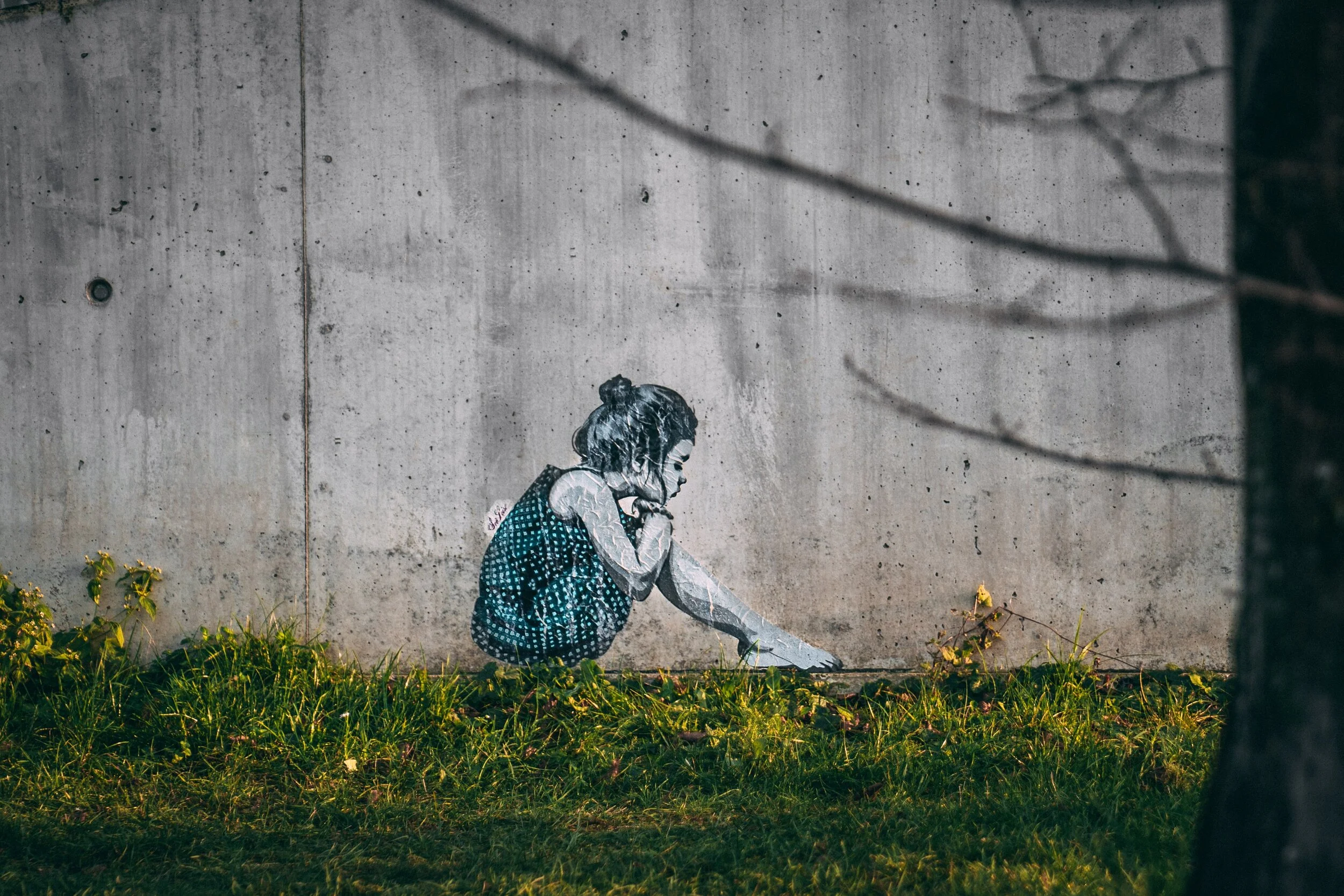
Photo by Mika Baumeister.